Neon, physics-driven car merging for short score-chasing runs
Dream Car Merge, from Quanetiv, is a physics-driven puzzle game that asks players to drop and combine vehicles inside a confined arena to chase high scores and build a car collection. The core loop blends 2048-style matching with physics-based rolling and tumbling to create emergent chains and tense spatial decisions. Key elements include Fever Mode, global leaderboards, daily missions, and eight unlockable environments. The app targets casual mobile players who enjoy collectible progression and repeatable score runs.
What kind of puzzle loop drives play?
In this game, play centers on a drop-and-merge loop that blends familiar mechanics into a single session. Players drop cars into an arena; when identical vehicles touch they automatically merge into a higher-tier model, and merged cars can roll, tumble, and settle because of physics-based movement. The result is a tension between spatial planning and unpredictable motion. Core steps include:
- drop a car
- watch physics settle
- trigger merges and chains
Does it reward fast combos and long runs?
In practice, the scoring system favours chain reactions and sustained runs. The app includes a Fever Mode that activates from rapid chains and grants score multipliers, while global leaderboards let players compare best runs worldwide. Daily missions and a rewards system create short-term goals that encourage repeat play. Rounds end if cars overflow the arena boundaries, forcing players to weigh risky stacking against the chance to reach rarer vehicles.
How do visuals and sound shape the session?
Placed in a neon synthwave palette, the presentation foregrounds color and rhythm rather than photographic realism. The game uses a retro sunset aesthetic and a matching soundtrack to set tone, and it adds tactile feedback such as screen-shaking celebrations for rare merges. Eight handcrafted environments, including Neon Tokyo, Grand Prix Night, and Jungle Expedition, provide distinct backdrops while keeping the core mechanics intact.
Is progression approachable for casual mobile players?
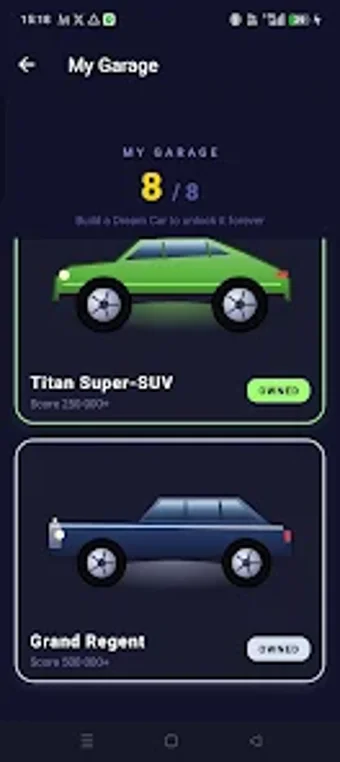
For casual players, progression is collection-driven and modular. The vehicle roster runs from City Hatchbacks through Muscle Cars and Supercars up to a collectible Golden Hypercar, giving long-term goals for completionists. Daily missions provide routine objectives, and the design supports offline play, with an online connection required only to post leaderboard scores. The challenge emphasizes spatial judgment and timing more than complex input mechanics.
Who should pick it up and why
The app is a focused pick for casual mobile players who enjoy short score-chasing sessions and gradual vehicle collection, as it is designed for that audience. However, the physics-driven motion makes outcomes less deterministic, so players seeking exact, arithmetic-style merging may find it unpredictably dynamic. For players who accept emergent motion as part of the puzzle, the design rewards repeated runs and incremental mastery.